

Fluid Control or Dosing Pump
Fluid Control or Dosing Pump
Precision Fluid Control: Understanding Our Dosing Pump Range
Dosing pumps, also known as chemical metering pumps, are high-precision positive displacement pumps designed to inject a very exact and controlled volume of a chemical or other substance into a water stream, tank, or process line.
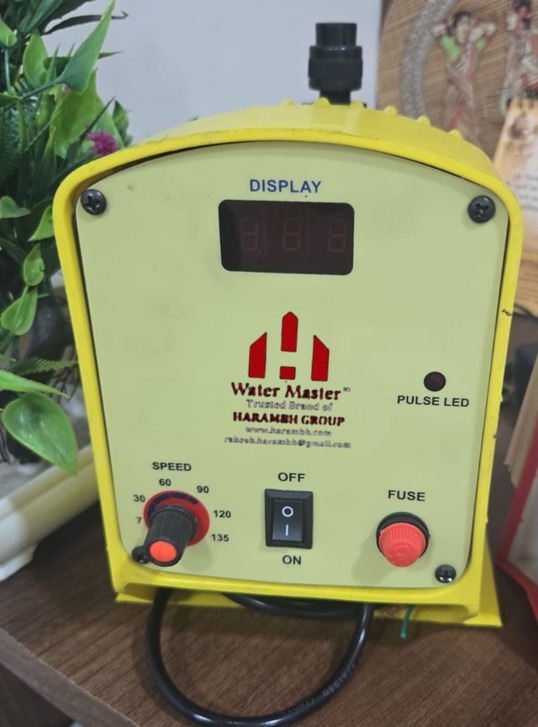
1. Simple Pump (Standard Dosing Pump)
Concept: The workhorse of chemical injection.
Explanation for Website:
“Our Simple/Standard Dosing Pump is built for reliable, consistent, and straightforward chemical injection tasks. This category typically includes durable, electromagnetically driven or motor-driven diaphragm pumps. It is the perfect entry-level or general-purpose solution for applications where you need to deliver a set amount of fluid, such as basic water chlorination, cooling tower treatment, or pH correction.
Key Feature: Reliable, cost-effective, and easy to operate.
Control: Flow rate is usually adjusted manually via stroke frequency (pulses per minute) or stroke length (volume per pulse).”
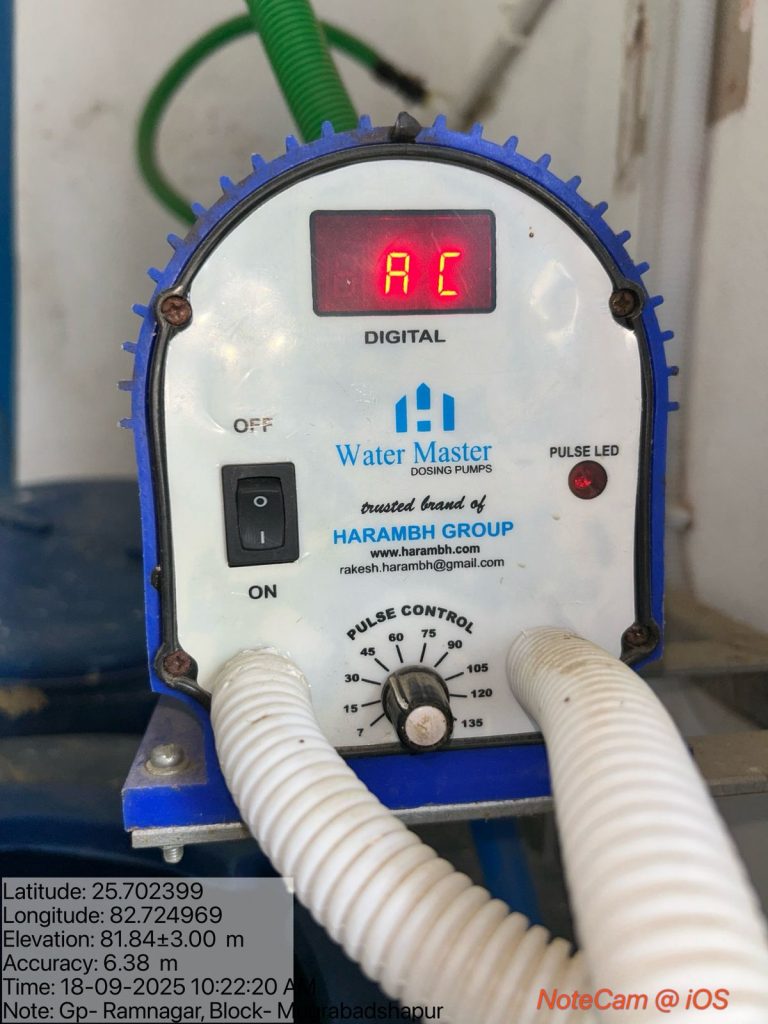
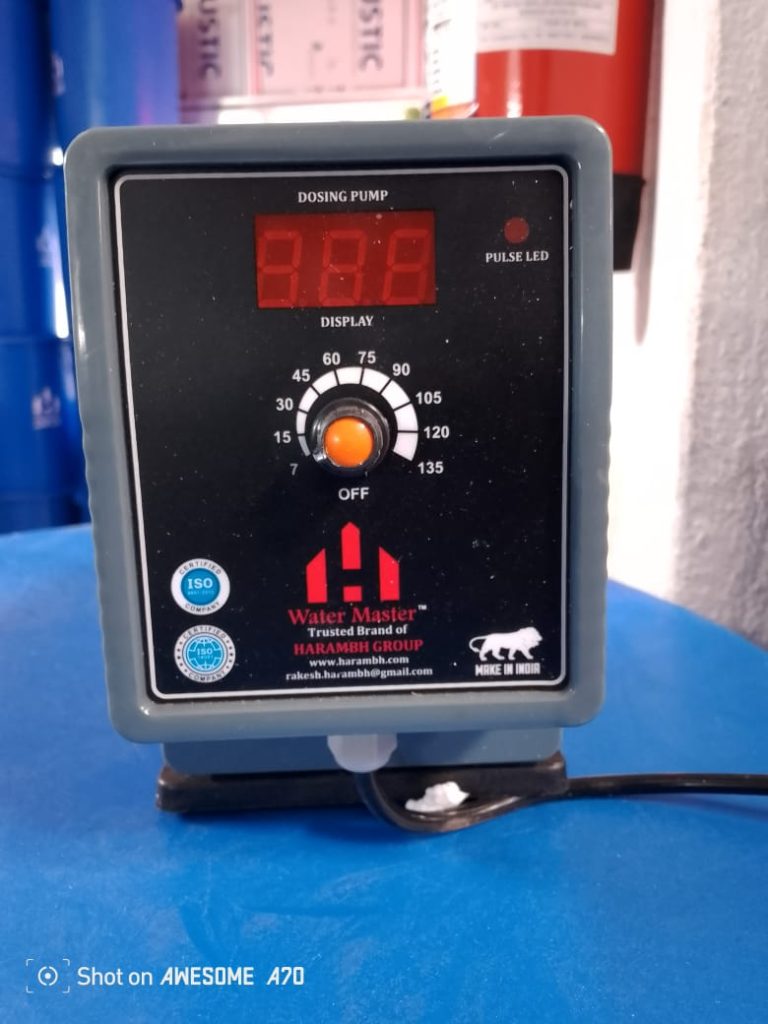
2. 6 LPH and 12 LPH
Concept: Flow Rate Capacity.
Explanation for Website:
“The LPH (Liters Per Hour) rating defines the maximum volume of chemical the pump can inject over a one-hour period. This is the critical specification for matching the pump to your process requirements.
6 LPH Pump: Ideal for smaller-scale applications like residential water treatment, small cooling towers, swimming pools, or laboratory use. It provides precise dosing at lower flow rates, ensuring you don’t waste chemicals by overdosing.
12 LPH Pump: Suited for medium-scale industrial and commercial applications, such as medium-sized water treatment plants, industrial boiler feed systems, or chemical processing lines that require a higher volume of additive.
Choosing the right one depends entirely on the volume of fluid you are treating and the desired concentration of the chemical.”
3. 4−20 mA Pump and RS-485 Pump
Concept: Advanced Communication and Automation.
Explanation for Website:
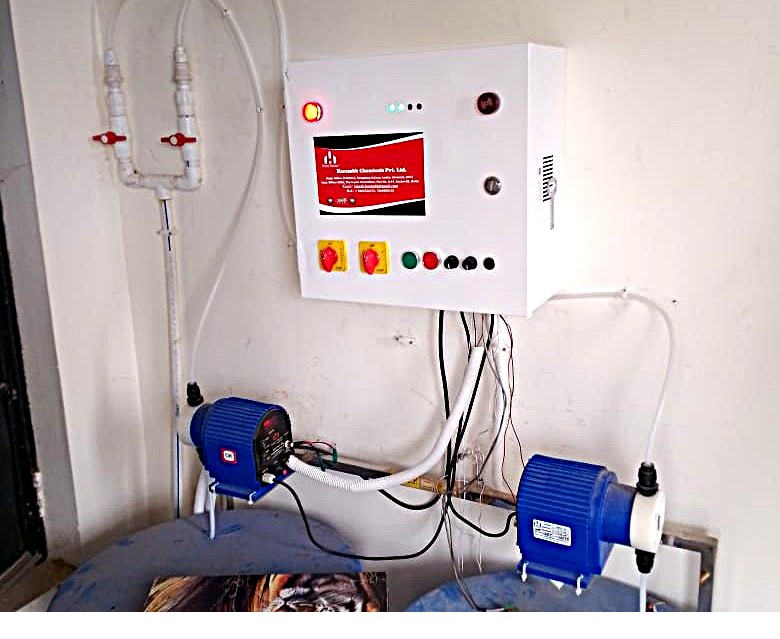
“For modern industrial processes and complete automation, our advanced dosing pumps offer sophisticated communication protocols. These features allow the pump to be controlled remotely and dynamically by external equipment, ensuring your dosing is perfectly proportional and precise.
4−20 mA Control Pump (Analog Signal)
The 4−20 mA is the industry standard analog signal for continuous control.
How it Works: The pump receives a continuous electric current signal (in milliamps, mA) from a sensor or a PLC (Programmable Logic Controller).
Control:
• A signal of 4 mA typically tells the pump to stop or run at its minimum flow rate (0%).
• A signal of 20 mA tells the pump to run at its maximum flow rate (100%).
• Any signal in between (4 mA to 20 mA) adjusts the flow rate proportionally.
Benefit: Provides real-time, proportional dosing. For example, as a flow sensor reports a higher water flow, the mA signal increases, and the pump automatically increases its chemical dose to maintain the correct concentration.
RS-485 Pump (Digital/MODBUS Communication)
RS-485 is a robust, two-way digital communication standard, commonly using the Modbus RTU protocol.
How it Works: The pump is integrated into a network (like an Ethernet network) and communicates digitally with a central control system (HMI or SCADA).
Control: Instead of a simple current level, the central controller sends digital commands to the pump. This allows you to remotely:
• Set a specific flow rate (e.g., “Run at 7.5 LPH”).
• Start/Stop the pump.
• Query the pump’s status (e.g., “What is your current flow rate?”).
• Read diagnostic and alarm data.
Benefit: Enables complete remote monitoring, diagnostics, and precise programmatic control over multiple pumps simultaneously, making it essential for smart, networked, and high-level process automation.”

Why Choose Us
